

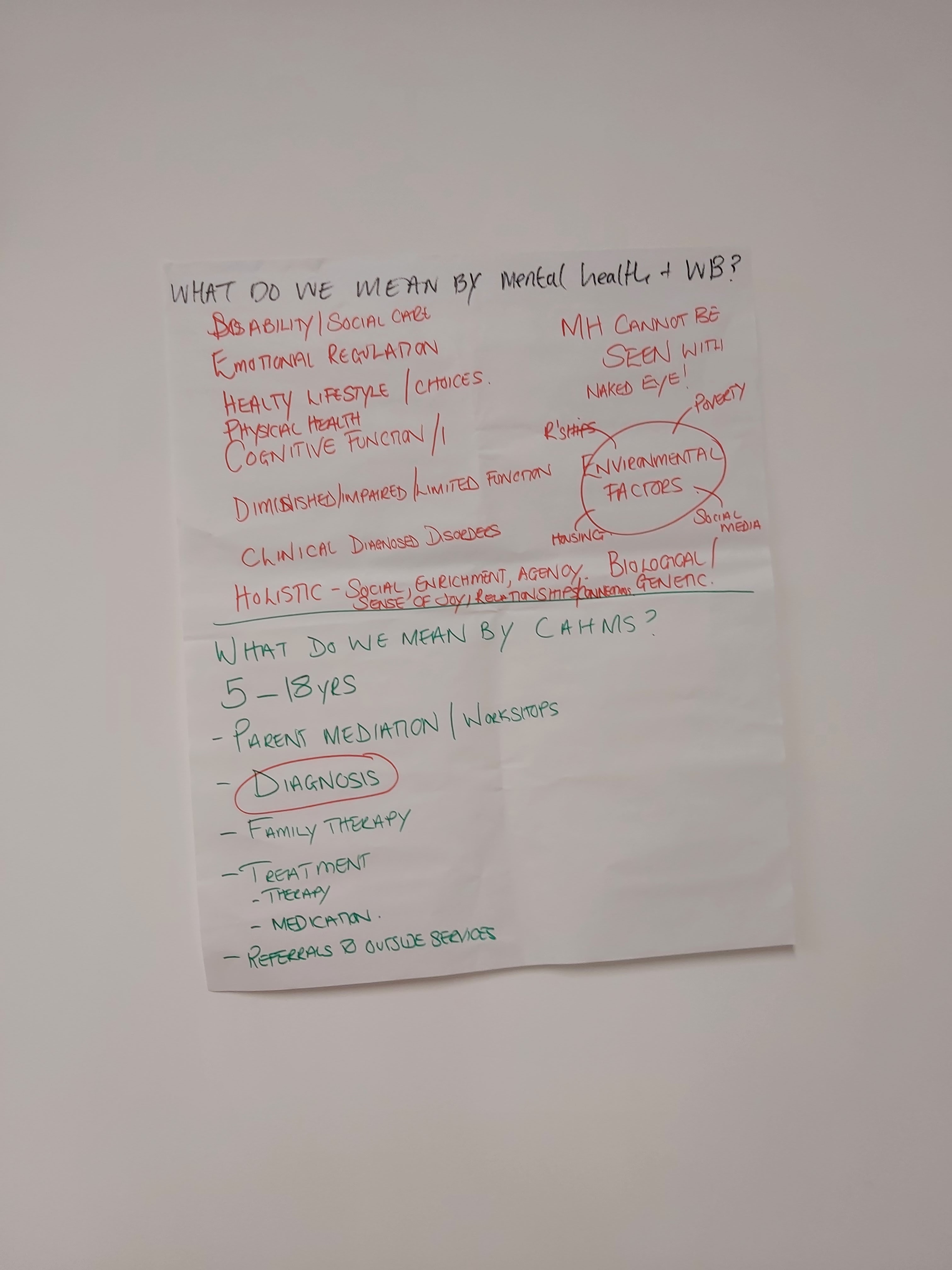
Mervelee Myers must address this from the perspectives of the traumatised only surviving girl of my parents who experienced “childhood traumas” from disabilities and poverty in the first instance. Refer to to the meaning of CAMHS) for why the world must wake up to what is happening in the UK education system leaving children with SEND and their families to bear the brunt of systemic discrimination. I will be taking pot shots of written information like this based on the way I have been treated 32 years in this country. I am doing this because I reached out to Mr. Tony Cealy about helping me to share my stories. Mr. Cealy helped me to come from the background where I retreated after my father was stricken with Parkinson’s and my world fall apart. I met Mr. Cealy at the Walworth Living Room when I was a volunteer at Pembroke House. The only organisation that offered me a volunteering role after the second miscarriages by HMCTS https://www.gov.uk/employment-tribunal-decisions/ms-m-myers-v-london-early-years-foundation-2300047-2016. It is time to stop putting plasters on the wound that needs amputation. Refer to https://www.facebook.com/groups/RattyNembhard/ where https://www.facebook.com/mervelee.myers created 18 pages Facebook Community HUB that have been disabled.
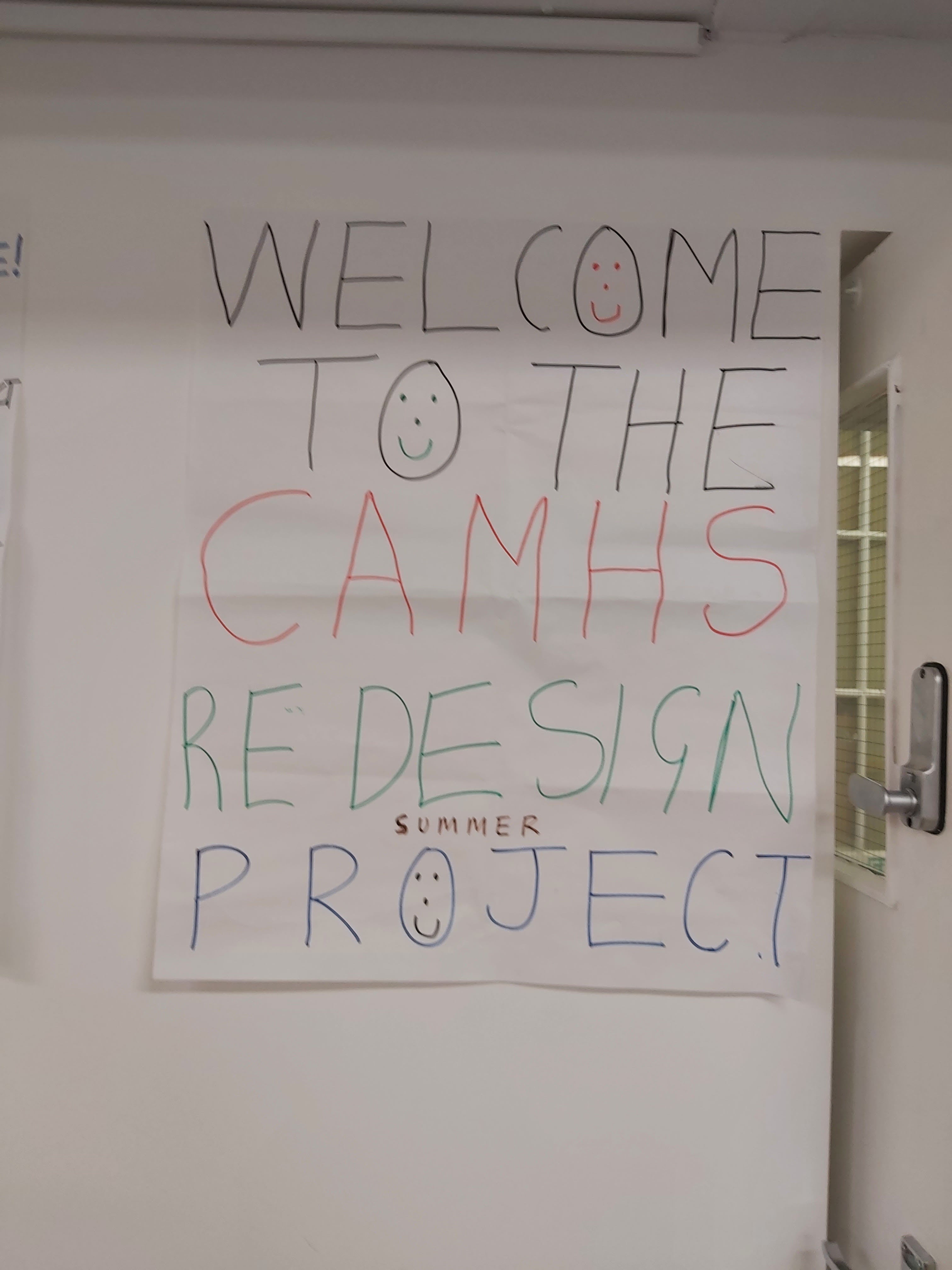
Child and Adolescent Mental Health Services
What are CAMHS? Child and Adolescent Mental Health Services (CAMHS) are services that support young people experiencing poor mental health, or difficult feelings or experiences.

Mervelee Myers must address the above as giving up before we even try to change the system. This is the system that presided over the miscarriages of justice denying me my rights whilst making me statistic each time I experienced the “Multiple Discrimination” of Dr. Maria Hudson’s research paper for the Policy Studies Institute recommended to ACAS. I have written about this in my book “IN HONOUR OF STRONG WOMEN EVERYWHERE” signed by Metropolitan Police Commissioner Sir Mark Rowley at the launch of “A New Met for London” in September 2023.
If we are thinking about change we should be working in partnership to bring about the change. Instead we are preparing to paper over the cracks saying the system did not allow us to change. Am positive if Mr. Cealy had the courage to visit his sister after she was SECTIONED and had a conversation with her, he would be taking a different perspective on delivering change. For too long we accepted that we cannot get the change needed. That’s why Mervelee Myers is gagged and silence with threats of IMPRISONMENT and EVICTION after 23 years of hell by the alcoholic racist neighbour who has been coerced by the landlord to terrorise me.
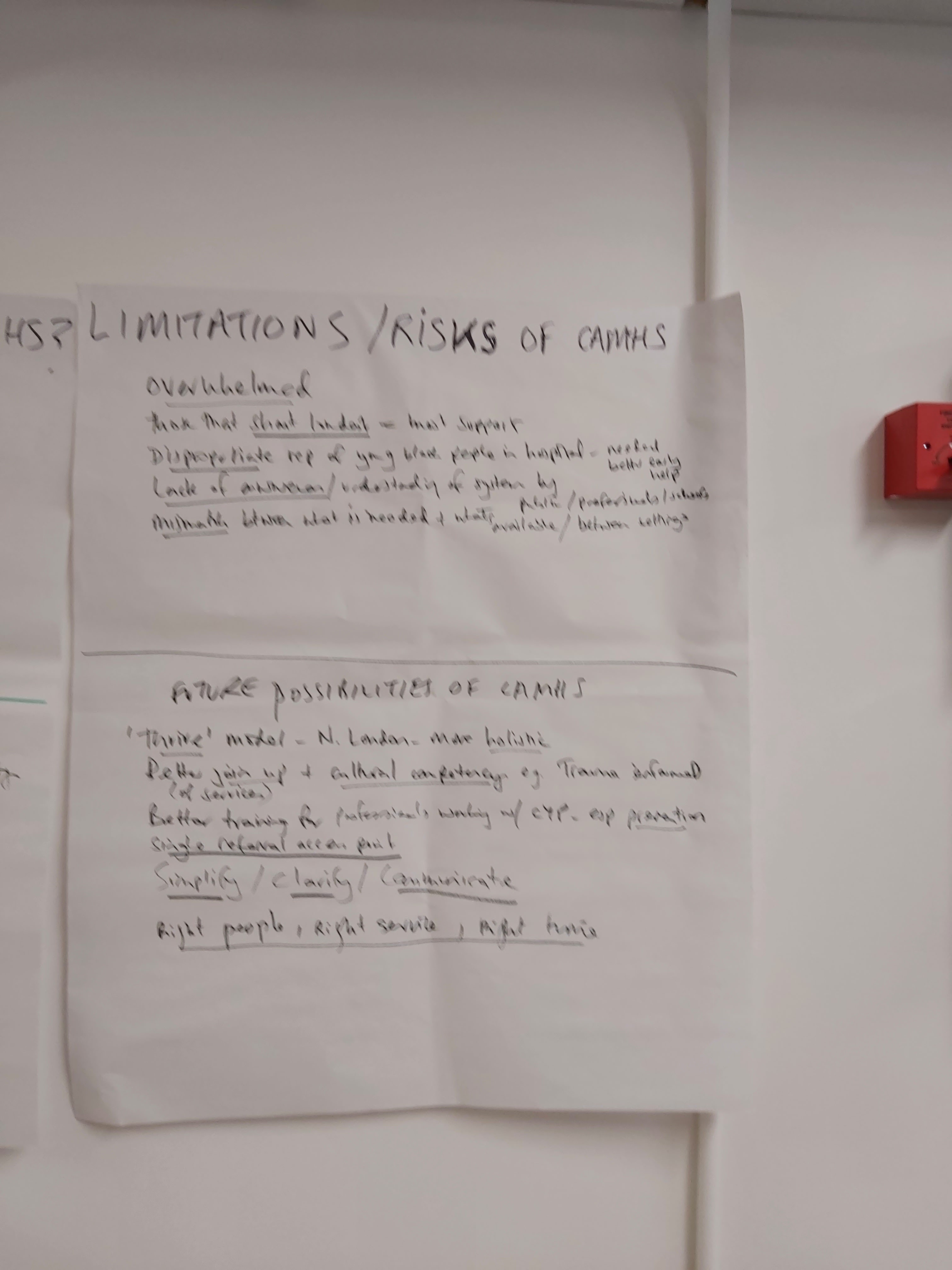
Refer to
CAMHS stands for Child and Adolescent Mental Health Services.
CAMHS is the name for the NHS services that assess and treat young people with emotional, behavioural or mental health difficulties. You might also see CYPMHS used which stands for Children and Young People’s Mental Health Services.
Evaluation: I am basing this on my experiences working in the Early Years Sector after I graduated from Lambeth College 1997-1999. Reference must be made to the current situation where I am the victim of the orchestrated plots of the Judiciary of England and Wales in covering up the miscarriages of justice from Kings College Hospital NHS Foundation Trusts and those involved. To http://www.leyf.org.uk and Richard Harty MIC Abusers Rings. Now the landlord targeted me social media must be used as evidence.

Refer to
CAMHS stands for Child and Adolescent Mental Health Services. CAMHS is the NHS mental health services for children and young people.
CAMHS support covers depression, problems with food and eating, self-harm, abuse, violence or anger, bipolar disorder, schizophrenia and anxiety, and other difficulties.
There are local NHS CAMHS services around the UK, with teams made up of nurses, therapists, psychologists, child and adolescent psychiatrists (medical doctors specialising in mental health), support workers and social workers, as well as other professionals.
Refer to
The first step to getting help from CAMHS is usually getting a referral for a CAMHS assessment. This referral can come from your parents/carers, a teacher, a GP, or yourself if you are old enough (depending on where you live).
If you’re being supported by social care, a youth offending team, or a service at your school, they might also be able to refer you.
Try to tell the person making the referral as much as you can so you can, to get the help you need.
Most local CAMHS teams have a website where you can look up how to get access to their service. You can find your local CAMHS team using your postcode.
Try to be as open and honest as possible at your first appointment. These people are not mind readers and if you lie, you will not receive the best treatment plan for you to get better.
Hannah
What happens at a CAMHS assessment?
Next you’ll be put on a waiting list for an assessment. This can sound scary but it’s normally just a chat so the CAMHS team can get to know you and see how they can help.
You’ll normally meet one or two members of the CAMHS team. If you’re under 16 years old, your parent(s) or carer(s) will usually be invited to join for part of this meeting.
This appointment will generally take place at a CAMHS clinic. But they might meet with you at your school or home. They’ll discuss with you the best place to meet before your appointment.
In the meeting the team will ask questions about your struggles so they can find the best support for you.
Here are some common questions the CAMHS team might ask in an assessment:
- What has brought you to CAMHS?
- How long have you experienced the problem that has brought you to CAMHS?
- What would you like to change in your life?
- What might help tackle the problems you are experiencing?
- How have you been feeling recently?
Refer to
Your CAMHS assessment is a great opportunity to ask any questions you have. Here are some questions you may want to think about asking in your CAMHS assessment:
- How long will I have to wait for treatment?
- What help can I get straight away?
- Can you recommend any local charities that help young people?
- Who do I call if I have a mental health emergency? Is there a 24-hour phone number?
- If I get talking therapy, how many sessions will I get?
- Is my GP still involved in my care?
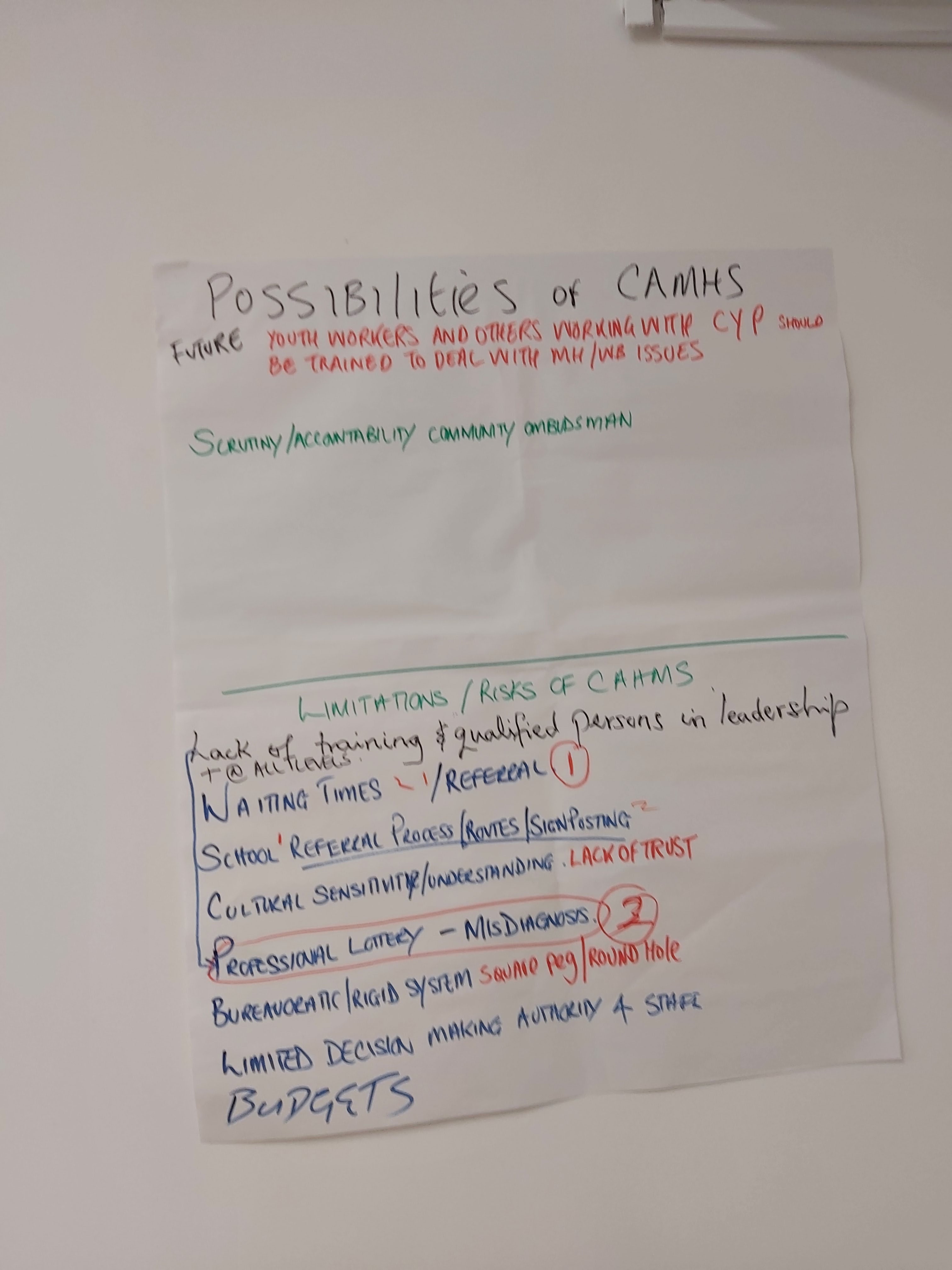
Refer to
It’s important at your CAMHS assessment to try and be as honest as possible, as this will help the team assessing you understand how to support you.
Here are some things that are helpful for you to tell them:
- when your problems started
- what you’d like to change
- if there’s a pattern in the problems (keeping a diary or log book before your assessment can be really helpful to show this)
- any difficulties in school or with friends
- any general health problems, either now or in the past
- any big family events or issues like divorce or bereavement
- any recent or past trauma, e.g. emotional, sexual or physical abuse
- other services you’ve had help from, like social care, hospital or private treatments
Questions about your treatmentQuestions about medication
Refer to
Once your treatment starts, you can still ask questions to make sure you are comfortable with what’s going on. Here are some questions you may want to consider asking:
- Do I have to take medication?
- If I do take medication, will I get a talking therapy at the same time?
- Is this the only treatment available for me?
- Is it a common treatment for people my age?
- Where can I find out more about my treatment?
- What if the treatment doesn’t work?
- If I do start to feel upset, what should I do?
- How will the treatment make me feel?
Questions about medication
Refer to
Once your treatment starts, you can still ask questions to make sure you are comfortable with what’s going on. Here are some questions you may want to consider asking:
- Do I have to take medication?
- If I do take medication, will I get a talking therapy at the same time?
- Is this the only treatment available for me?
- Is it a common treatment for people my age?
- Where can I find out more about my treatment?
- What if the treatment doesn’t work?
- If I do start to feel upset, what should I do?
- How will the treatment make me feel?
Questions about medication
If your treatment involves medication, here are some questions you may want to ask:
- What are the side effects of the medication?
- How long will it take to make me feel better?
- Will I have to take it forever?
- Can I stop this treatment at any point?
- What do I do if I start feeling worse?
- Will the treatment cure me?
- Do I have to tell my teachers/friends/family?
- Can I join any local groups for children and young people having the same treatment?
- Are there things that I can’t do because of my treatment?
- Will I receive regular check-ups?
Find out more in our medication guides
Refer to
Early Intervention is KEY to SURVIVAL
I must focus on my contributions to the Early Years Sector and how I have been denied my RIGHTS experiencing “Multiple Discrimination and Miscarriages of Justice”. My qualifications and trainings must be considered. In 2009 when I joined Westminster Children Society now LEYF I did trainings including “Understanding Statutory Assessment”. I spent the past 10 years after the death of my mother writing and defending myself in court. Not much changed since I had the first nervous breakdown at Kings College Hospital NHS Foundation Trust except I was manhandled for raising concerns about the neglect of my 101 year old husband.
Refer to
 Fight4justice